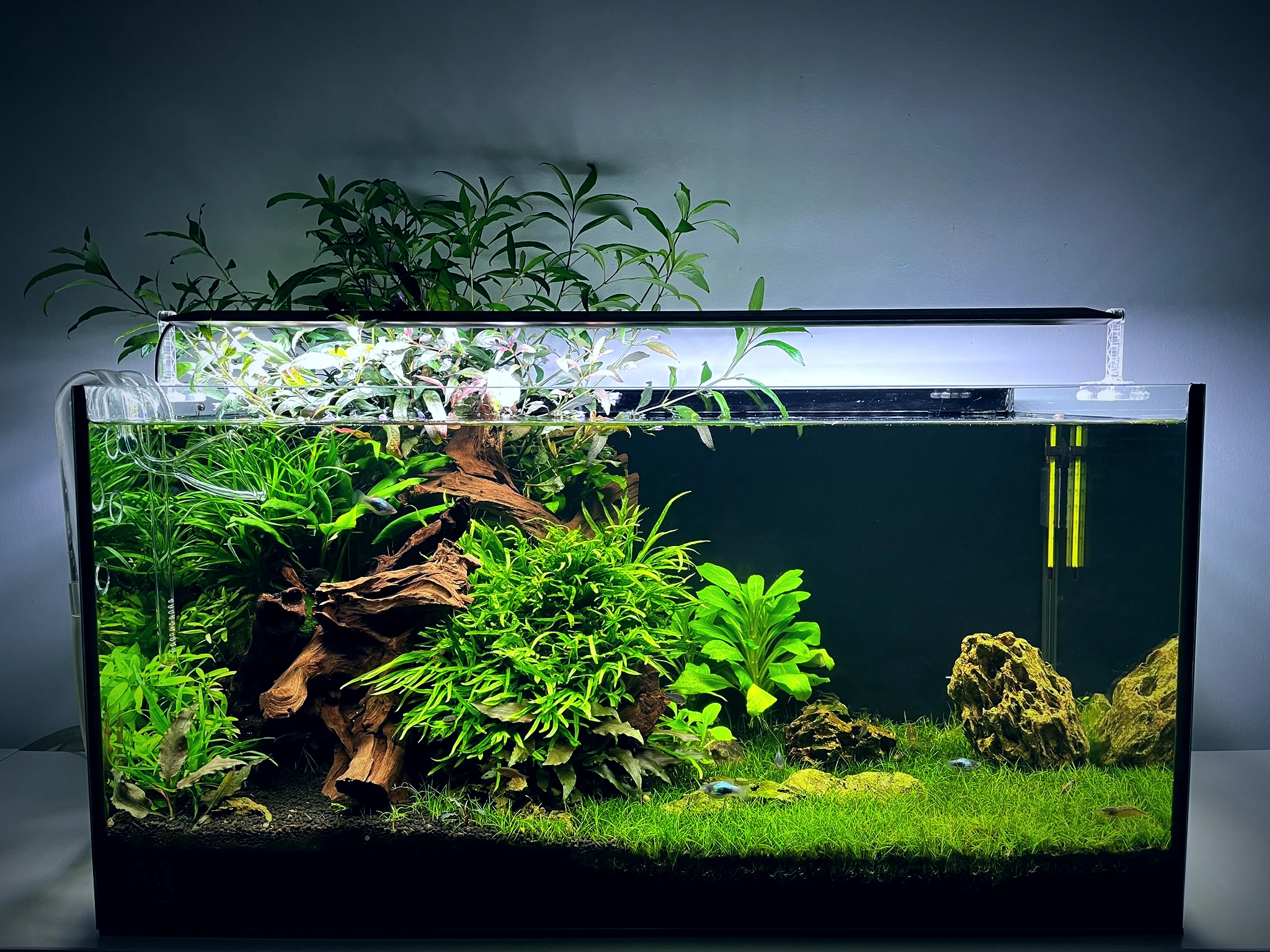
Planting
How to plant each type
Rhizomes, stems, rosettes, carpets, and floaters need different treatment. Get the base right.
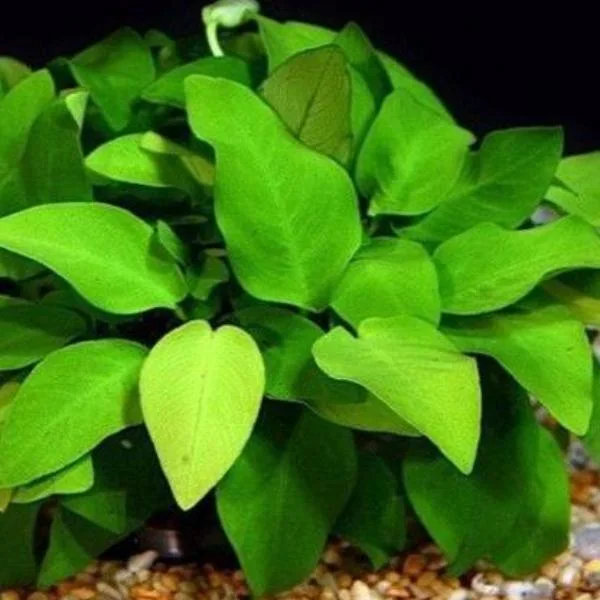
Anubias barteri var. nana
Compact, broad leaves add a deep green accent among rocks and branches. Its slow, steady growth makes it a useful choice for a relaxed maintenance routine.
Loading current price & options…
Nestle the roots into a crevice or secure the plant to hardscape. Leave the rhizome exposed to moving water; burying this stem can lead to rot. Allow space around the plant for future leaves.
Use lower light or a little shade from taller plants. Keep debris off the leaves and maintain a consistent routine rather than increasing light to force faster growth. Slow growth is normal.
Divide a healthy, established rhizome with a clean blade, leaving several leaves on each piece. Secure each division separately and give it time to settle.
Algae can collect on long-lived leaves. Check light intensity and duration before assuming the plant needs more fertilizer.
Product identification and imagery: AquariumFish.com: Nana Anubias. Additional growing guidance: Tropica plant directory.
Rhizomes, stems, rosettes, carpets, and floaters need different treatment. Get the base right.
Choose a rooting medium and feeding routine that work with the plants and water you have.
Separate normal adjustment from ongoing decline by inspecting the base and watching new growth.