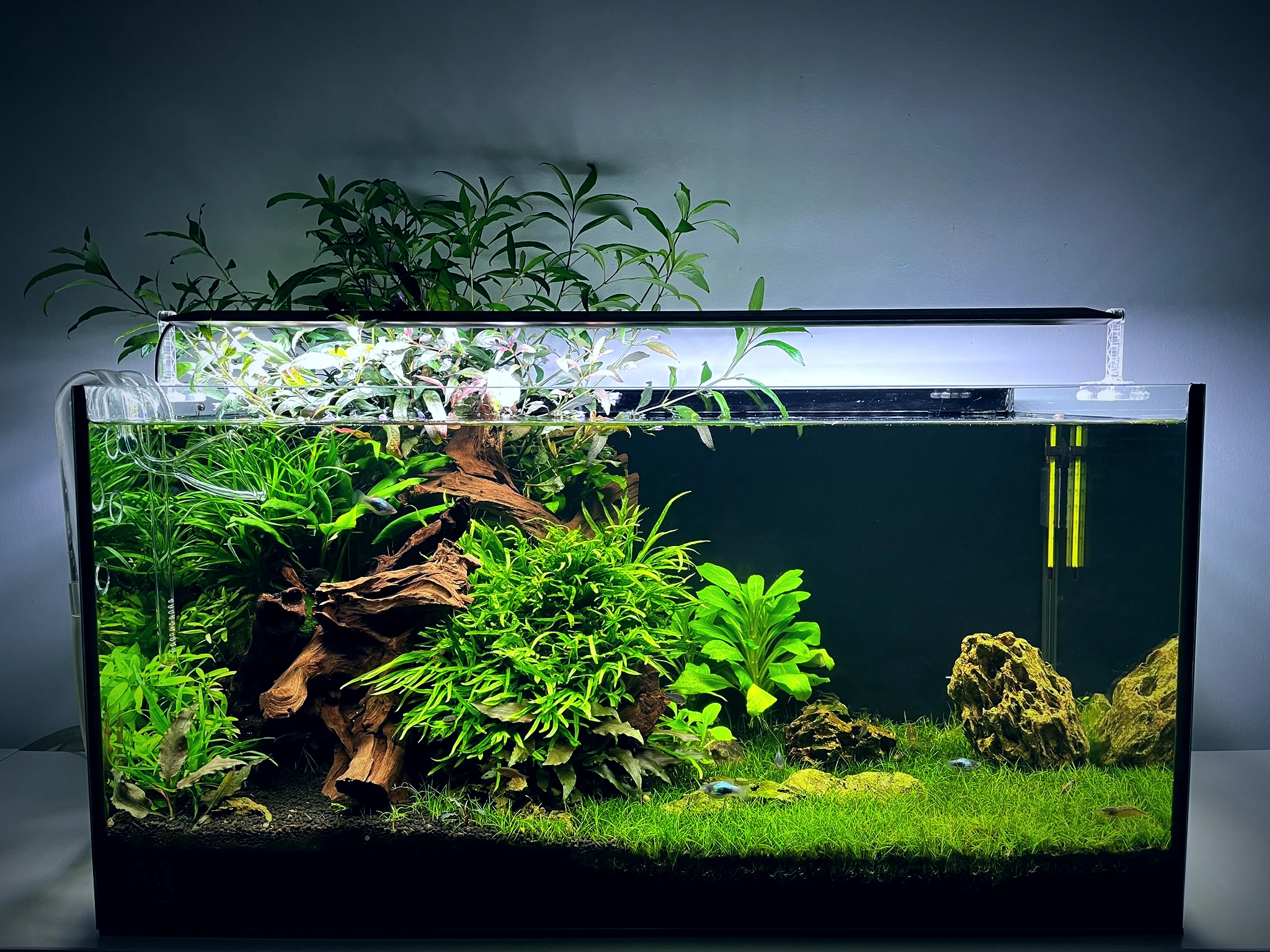
A substrate has more than one job
The bottom layer anchors plants, supports roots, and may provide or hold nutrients. Inert sand or gravel and nutrient-rich aquarium soils behave differently. Check the product’s instructions, including any effect on water chemistry, before choosing a material.
Feed the plants you grow
Rooted rosettes such as swords can benefit from nutrients in the root zone. Attached plants and mosses also use nutrients available in the water. This is not a strict roots-versus-leaves split: consider the plant, the substrate, and the whole aquarium.
Follow a measured routine
Use an aquarium plant fertilizer and begin with its labeled directions for your tank. Account for existing livestock, feeding, water changes, and whether the substrate already contains nutrients. Do not add multiple products without checking overlapping ingredients.
Read symptoms cautiously
Pale leaves, holes, and slow growth can have several causes. Old leaves damaged during shipping will not become perfect again after dosing. Check new growth, inspect for grazing damage, and consider light and carbon before identifying a specific deficiency.
Keep notes and give changes time
Record fertilizer amounts, water changes, and visible growth. Change one part of the routine at a time and judge the next set of leaves. A simple, repeatable schedule is easier to improve than frequent large adjustments.
Further reading & references
Tropica: hardscape and substrate ↗Tropica: frequently asked questions ↗Original practical guidance compiled for AquaticPlantSale.com. Plant response varies with species and aquarium conditions. Photography credits are listed on the credits page.