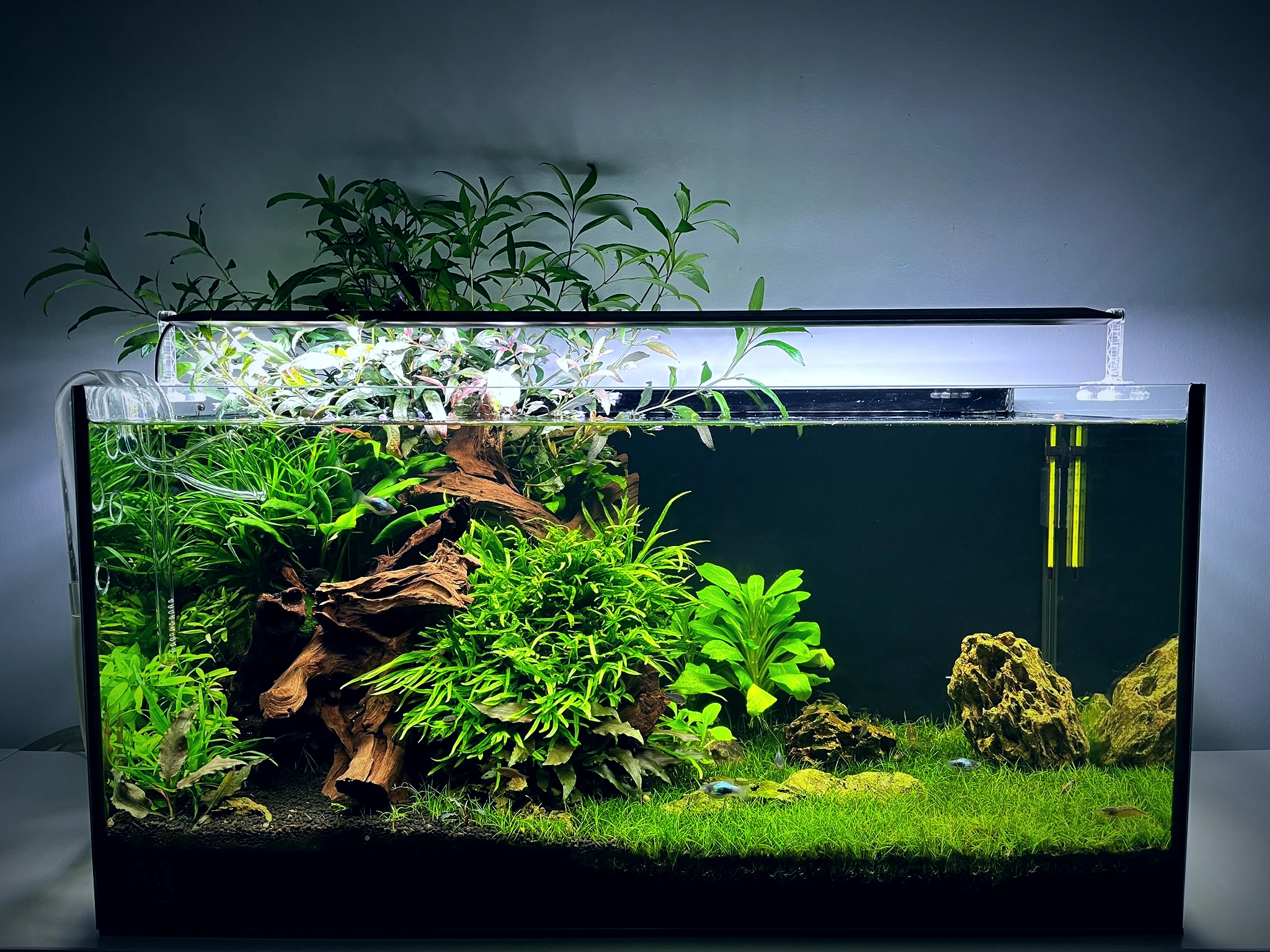
Planting
How to plant each type
Rhizomes, stems, rosettes, carpets, and floaters need different treatment. Get the base right.
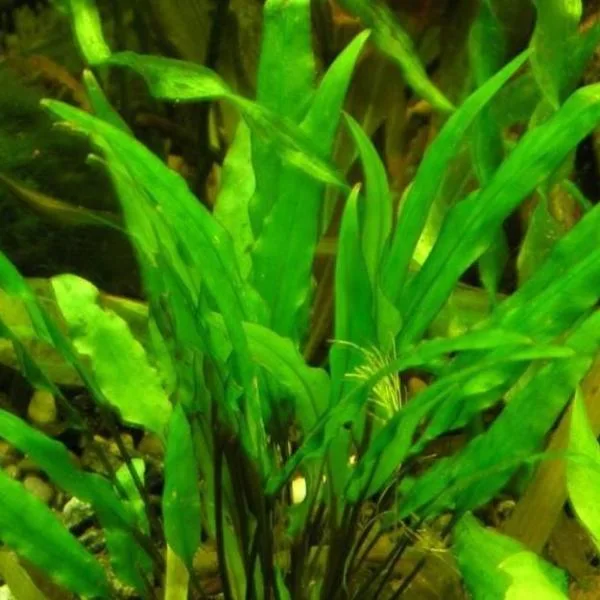
Cryptocoryne wendtii ‘Green’
A textured green rosette for a natural transition between small foreground plants and taller stems. Its shape varies with light, space, and growing conditions.
Loading current price & options…
Plant the roots and leave the crown at the substrate surface. Choose the position carefully: repeated uprooting can slow establishment.
Keep the environment consistent while the roots settle. Remove leaves that become transparent or break down, and watch for firm new growth from the center. A nutrient source at the roots can be useful in an inert substrate.
Allow small daughter plants to develop their own roots before gently separating them from the parent.
Crypts can shed older leaves after a change in conditions, often called crypt melt. Check that the base remains firm and remove decaying leaves; new growth is a better indicator of recovery.
Product identification and imagery: AquariumFish.com: Cryptocoryne Wendtii Green. Additional growing guidance: Tropica plant directory.
Rhizomes, stems, rosettes, carpets, and floaters need different treatment. Get the base right.
Choose a rooting medium and feeding routine that work with the plants and water you have.
Separate normal adjustment from ongoing decline by inspecting the base and watching new growth.